
How AI Agents Actually Work (What's Really Going On Behind the Scenes
Let Me Start With Something You've Probably Already Seen
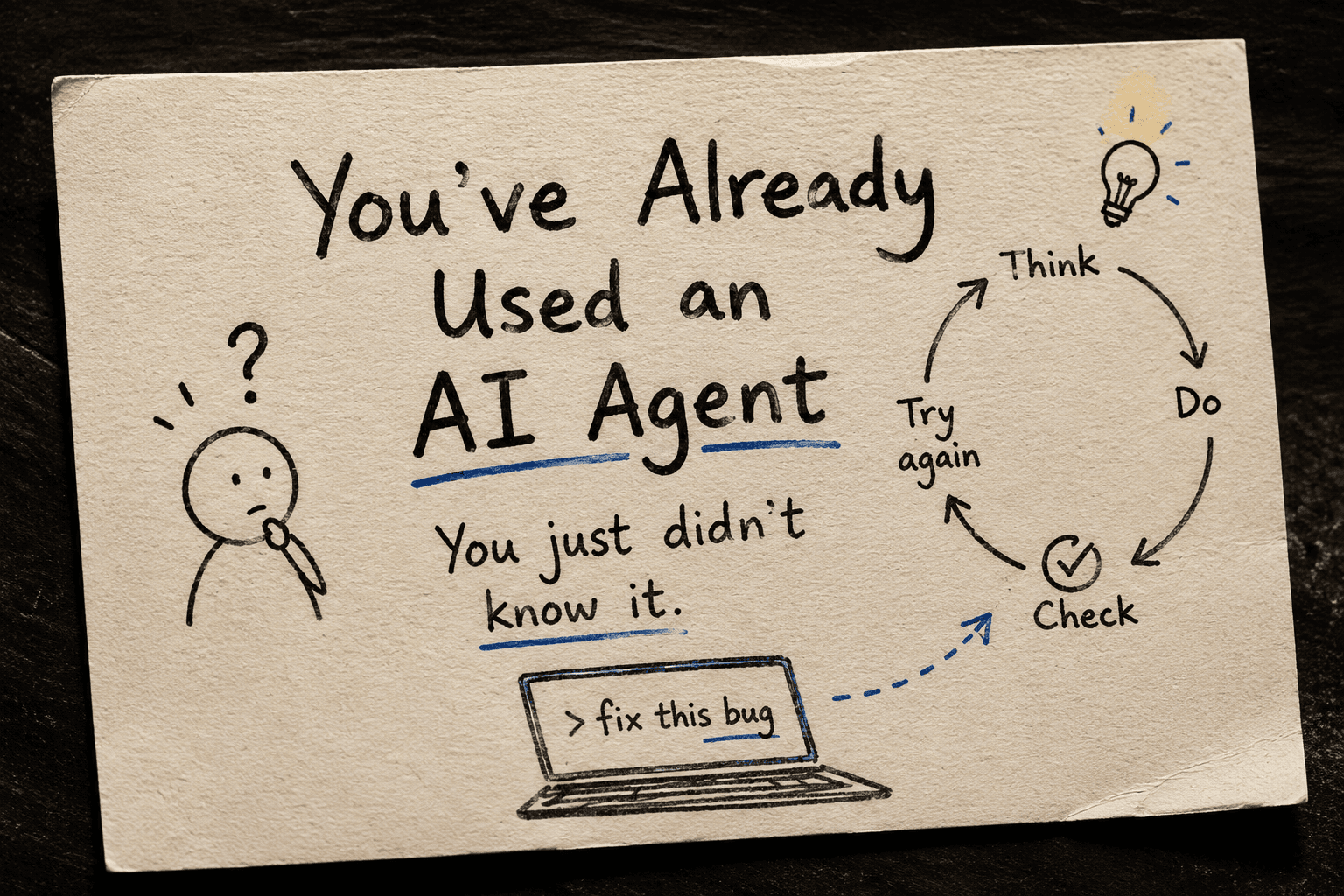
You type something like:
"fix this bug"
And then… you stop.
You don't keep typing.
You just watch.
It reads your code. Changes something. Runs it. Fails. Tries again.
And after a few seconds… it works.
Most people just think:
"nice… it fixed it."
But if you pause for a second, there's a strange question hiding there:
What is actually happening behind the scenes?
Because this doesn't feel like:
- a normal chatbot
- or a simple answer
It feels like something is doing work step by step.
The Mental Model Most People Have
At first, I assumed something like this:
One super smart AI
→ understands everything
→ decides everything
→ does everything
Basically:
one giant brain doing the entire job.
Sounds reasonable.
But That's Not What's Actually Happening
Once you start digging a little deeper, the picture changes.
A lot.
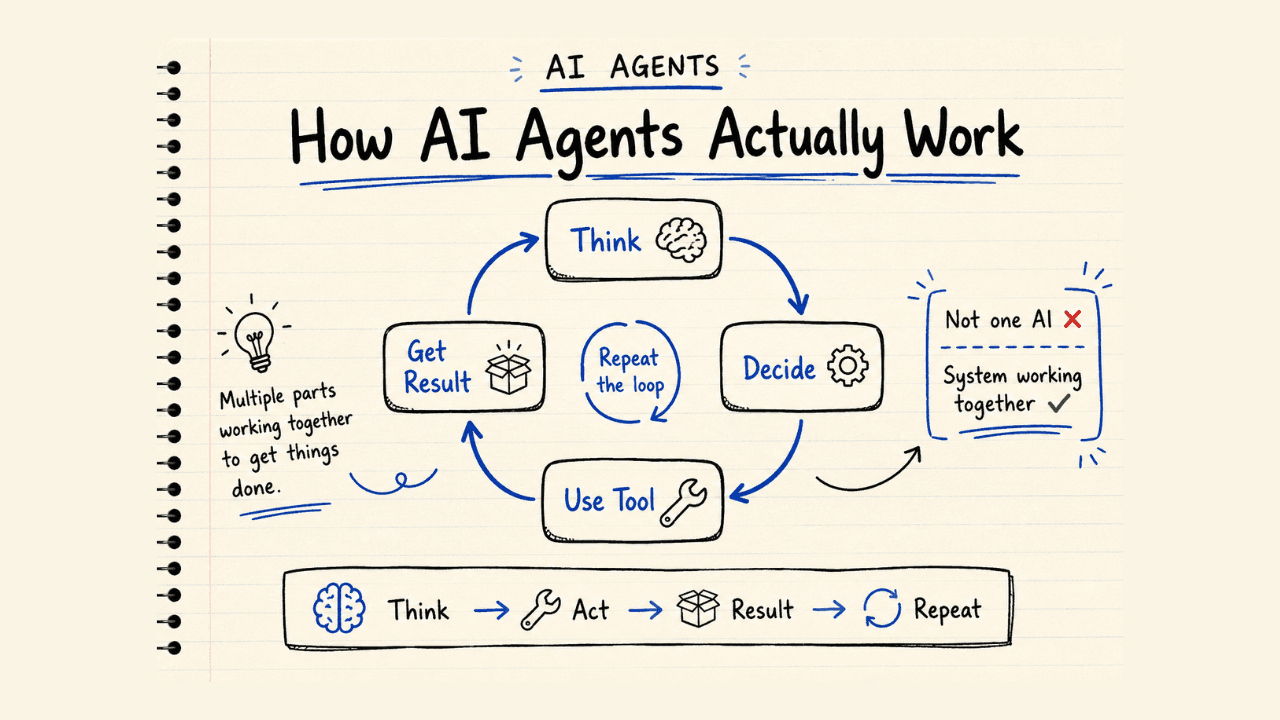
Because real AI agents don't look like one thing.
They look more like this:
Brain (AI)
↓
Decision layer
↓
Tools
↓
Execution system
↓
Results
↓
Repeat
Not one thing.
A chain of parts working together.
🔍 Let's Break This Down (Without Making It Complicated)
Forget fancy terms for a second.
Here's the simplest way to think about it:
🧠 1. The Brain (AI Model)
This is the part you already understand.
It reads your request and thinks:
"what should happen next?"
⚙️ 2. The Decision Layer
This part is subtle… but really important.
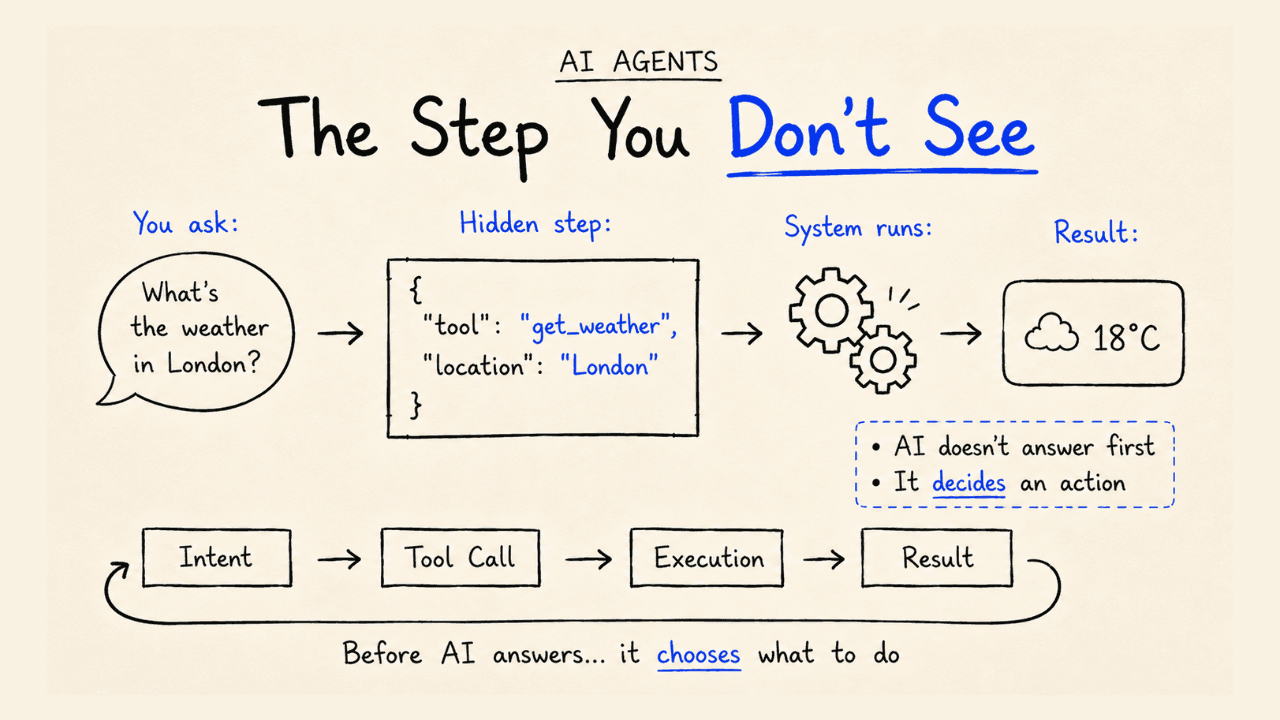
Instead of replying with normal text, the AI sometimes outputs something like:
{
  "tool": "search_web",
  "input": "AI startups 2026"
}
That's not a sentence.
That's an instruction.
This is the moment where:
thinking turns into action.
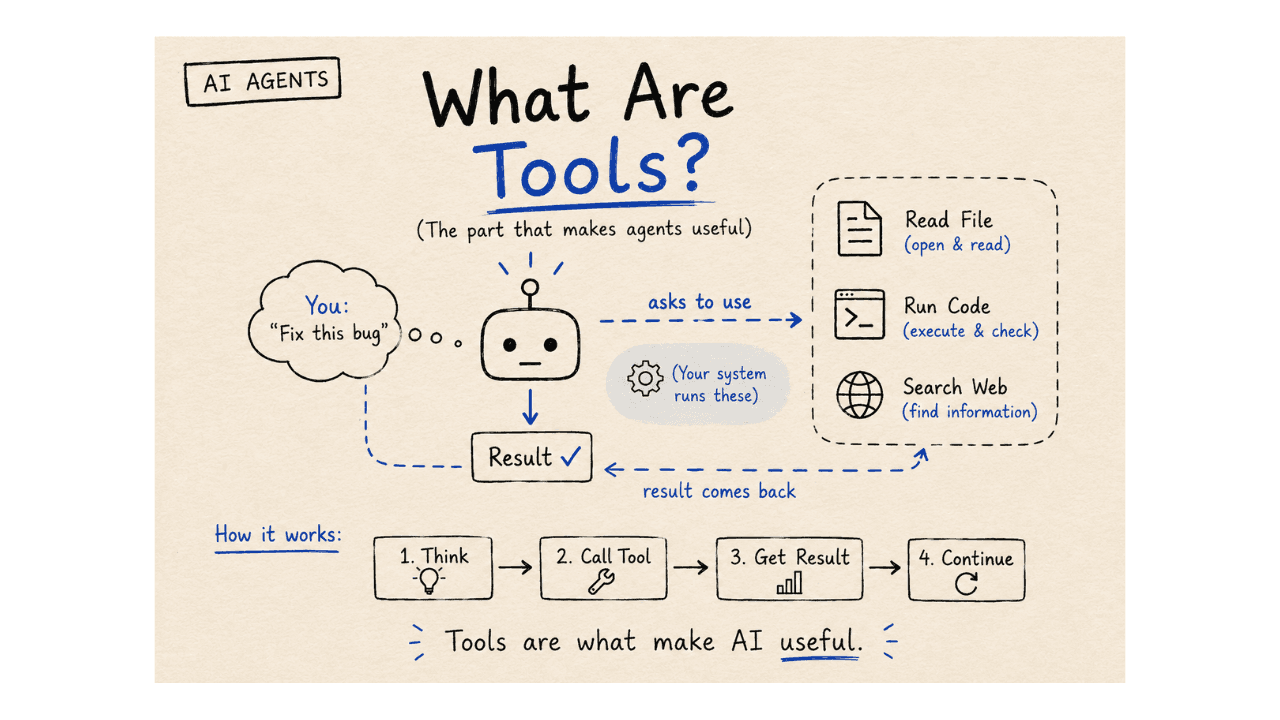
🤲 3. The Tools (The "Hands")
These are the actual things that can do work:
- search the web
- open a file
- run code
- call an API
AI = brain tools = hands
🚨 4. The Part Most People Miss
Here's the important twist:
The AI does NOT run the tools.
It only asks.
Something else runs them.
🔄 What Actually Happens
Let's say you ask:
"Find top AI startups"
Here's the real flow:
Step 1 → AI thinks
          "I should search the web"

Step 2 → AI sends a tool call
          { tool: "search_web" }

Step 3 → Your system runs it

Step 4 → Results come back

Step 5 → AI continues
That's it.
That's the "magic."
👁️ If You Step Back… Something Interesting Appears
At this point you can already see something:
This is not just "AI answering questions."
This is:
👉 a system passing work between different parts
And once you see that…
you can't unsee it.
🧩 And Then Something Bigger
The more I looked into this, the more the idea of:
"one AI doing everything"
started to fall apart.
Because in real systems, different parts can be:
- different models
- different tools
- different pieces of code
- even separate services
For example:
- One model talks to the user
- Another model decides which tool to use
- Your backend executes the action
- Another layer controls the flow
That's not one AI.
That's a system.
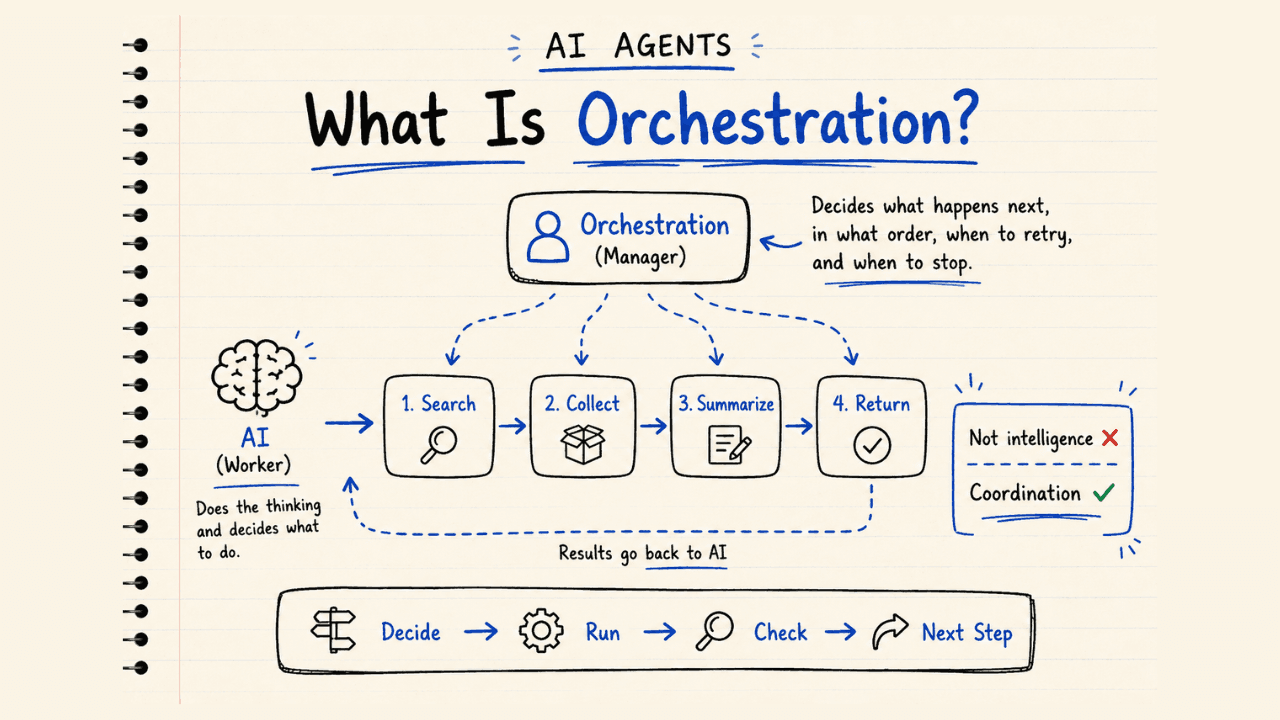
🎯 So What's Actually Running The Whole Thing?
Something has to decide:
- what happens next
- whether to call a tool
- whether to retry
- when to stop
That "something" is what people call:
👉 orchestration
Ignore the fancy word for now.
Think of it like this:
It's the part that keeps everything moving.
Like a coordinator behind the scenes.
A Simple Way To See It
If the AI can think and use tools, orchestration decides:
what step runs next
what order things happen in
what to do if something fails
when the job is finished
❓ And This Is Why Frameworks Exist
At this point, you might wonder:
"Why do we even need frameworks like Google's ADK?"
Because once you try to coordinate all these moving parts yourself…
you realize very quickly:
it gets messy. Fast.
Frameworks exist to handle the coordination so you don't have to rebuild it every time.
🗺️ The Cleanest Way To See The Whole System
If we simplify everything, it becomes:
You (user)
↓
AI (brain)
↓
Tool decision
↓
Tool call
↓
Execution system
↓
Result
↓
AI continues
That's the loop.
💡 The Big Shift
At the start, it feels like:
"AI is doing everything."
But now it becomes:
"AI is one part of a system doing the work together."
🎯 One Line Worth Remembering
An AI agent is not one thing. It's a system where different parts work together to get something done.
⏭️ What Comes Next
Once you see agents this way, a new question naturally comes up:
If all these parts exist… who is actually coordinating them?
👉 Next Post: What Is Orchestration in AI Agents? (The Hidden Layer That Controls Everything)